Warning: This article contains descriptions of violence against women.
When Carrie Pasquarello worked at the State Department, one of her jobs dealt with after-hour emergency calls from Americans in trouble abroad. She quickly noticed a pattern: unprepared travelers.
Many didn’t have insurance, any idea what the emergency phone number was in the country they were visiting or a plan for worst-case scenarios.
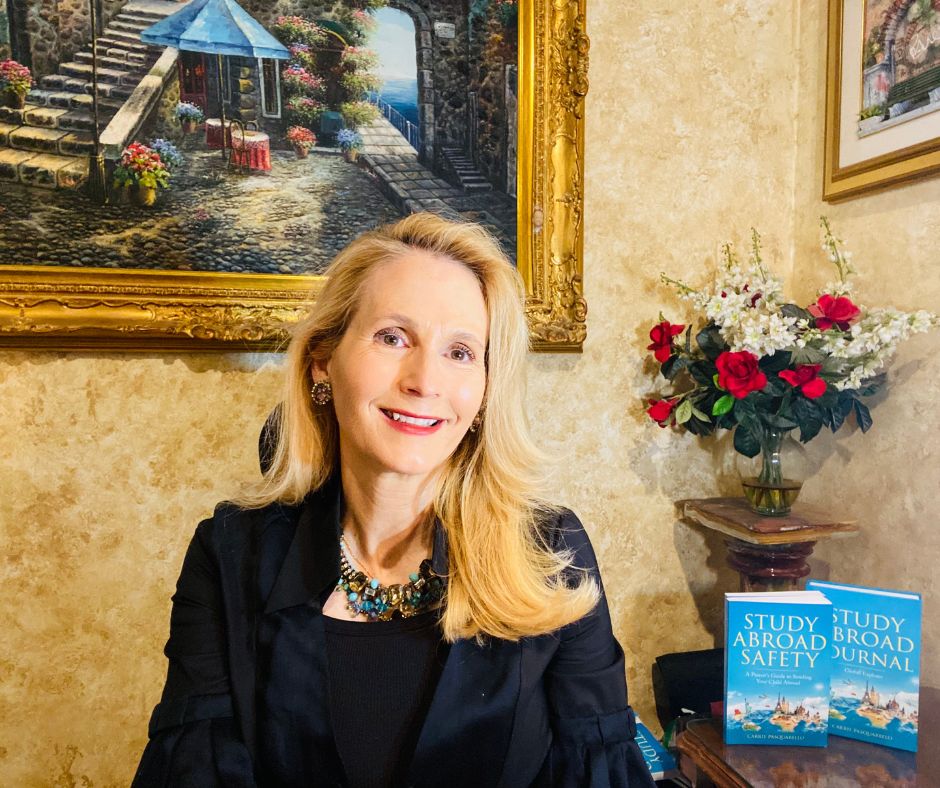
That’s part of the reason Pasquarello decided to launch her own business (Global Security Resources) focusing on keeping people safe as they travel the world. She’s also written a couple of helpful books, including “Study Abroad Safety: A parent’s Guide to Sending Your Child Abroad.”
Pasquarello was kind enough to have a long chat with me and share some of her smartest tips for solo female travelers.
Here’s what she wants you to know before booking that trip:
The big three
Whenever Pasquarello talks to someone who’s about to leave on a big trip, she asks them three key safety questions. Most travelers have the wrong answers.
The first question is whether they know what the local emergency number is in the country they’re visiting. In the UK and Ireland, it’s 999, in Colombia it’s 123, in New Zealand it’s 111.
“I’m telling you, 99% of people will say, ‘I don’t know the number,’” Pasquarello said.
Knowing the local emergency number is an easy, basic first step to safe travel. And it can mean life or death depending on the situation.
The next thing Pasquarello asks people is whether they’ve enrolled in STEP. Again, 99 percent of people have no idea what she’s talking about.
STEP stands for the Safety Traveler Enrollment Program. Run by the U.S. State Department, STEP serves as notification to the U.S. government of where you’re going, how long you’ll be there and how they can reach you and your family members.
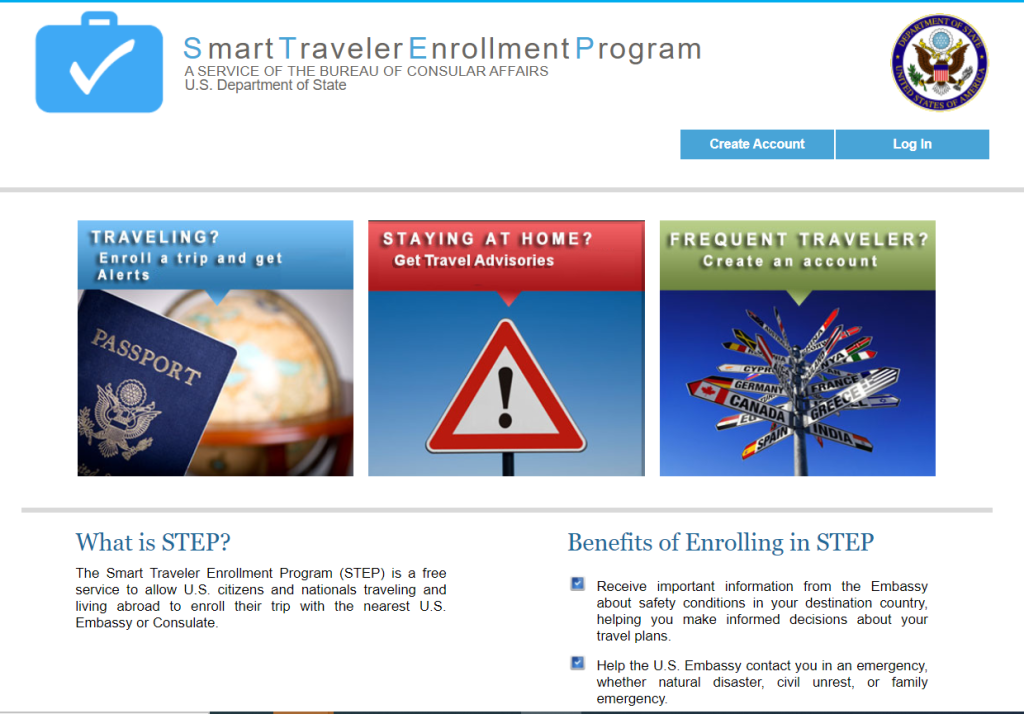
It may sound like Big Brother but Pasquarello said it can be a lifesaver if something were to go wrong.
“You’re able to get the direct messages about different situations, whether there’s political unrest, whether there’s a natural disaster coming – critical information that you might possibly need,” she said.
The last question has to do with insurance, but Pasquarello recommends going beyond the basic plans. In addition to travel insurance, Pasquarello recommends obtaining additional coverage to pay for hospital transfers back home should the worst occur.
Meaning, if you’re in a terrible car accident or have a medical episode, you’re not only covered for your care under regular travel insurance but also for the often-complicated transport back home.
Forbes has an excellent guide to evacuation travel insurance, and there are plenty of companies that offer the service.
Pasquarello, who partnered with Medjet a couple years ago and is now an affiliate, said she used the service before she got any compensation for recommending it.
“Let’s say you’re in Turkey, you break your leg … they might medivac you to England,” she said. “You still have to get home. Medjet would come in and take you back to America.”
She recalls one story of her two friends, husband and wife, who went to Punta Cana in the Dominican Republic. The husband had a stroke within 20 minutes of arriving to their hotel room on the first day.
After paying thousands for testing and a care at a local hospital, the couple’s card was maxed out and they needed to figure out how to get him back to the States.
“It took five days. They had to pay out of pocket $40,000, and actually that was cheap,” Pasquarello said. “I’ve seen up to $200,000 some places … It’s like AAA. You don’t want your car to break down but if it does, you want to get towed somewhere. It makes zero sense not to have it. In fact, I tell people that if you can’t afford it, you shouldn’t even travel.”
The best self-defense
Once the big three are out of the way, Paquarello said a woman’s best self-defense is simple: situational awareness.
That can mean 1,000 things but she said one trip her daughter took serves as a great example.
She was 16 years old and did a study abroad program in Egypt. Before she left, both her safety-savvy parents drilled some tips into her, including something that sounds very basic.
“If somebody comes to your hotel room door unannounced, you never open it. You always call down to the front desk and confirm it.”
Incredibly, someone did knock on her daughter’s room during that trip.
“It was a man, and he said he was maintenance to fix her air conditioner,” Pasquarello recalled. “She picked up that phone to confirm with the front desk and they said, ‘No, we didn’t send anybody.’ And that saved her life because why would you ever lie about who you are in that situation unless you’re a criminal?”
Pasquarello’s anecdote reminded me of a horrifying story about a woman, her 15-year-old daughter and her daughter’s 16-year-old friend in Yosemite National Park.
The three were in their hotel room in 1999 when a knock at the door came. It was Cary Stayner, who worked at the motel as a handyman but had no reason to enter their room. One of them reluctantly opened the door and Stayner killed them all, sexually assaulting the two teenagers.
These stories haven’t stopped Pasquarello from traveling the world and encouraging her daughter to do so. But they illustrate how important it is to trust your gut, be aware of potential dangers and make choices accordingly.
Thinking fast, telling lies
Pasquarello has lived on three continents and traveled the world. She has had a few close calls and shares them to help other women.
One story she often tells is from the days when she was growing up surfing in San Diego and took a road trip with a girlfriend to Rosarito, Mexico.
“As we were driving down we got pulled over by the federales and they told us that we ran a stoplight,” she said.
The group of men made them get out of the car, then they must have planted something to look like drugs on Pasquarello’s bag.
“They said, ‘Whose purse is this?’ And I said, ‘That’s mine.’ And they proceeded to unwrap toilet paper and they quickly flashed what appeared to be drugs,” she said. “I said, ‘Those are not my drugs. Absolutely not.’ And then they grabbed me and they put me in the back of the federal car with a huge man, and he had an industrial-sized wrench in his hand.”
Alarm bells exploded in Pasquarello’s head.
“I yelled to my girlfriend, I said, ‘They’re gonna kill me!’” she remembered. “Either I was going to be human trafficked and killed or just trafficked. It was going to be bad.”
Her friend thought fast.
“She goes, ‘You know, her father is the chief of police and you know, there’s gonna be a lot of police that are looking for her because we’re meeting a bunch of them right now. There’s going to be a lot of San Diego PD over here,” Pasquarello said. “So they thought about that and then they let me go.”
“I just said, ‘OK, that’s it. No more Mexico for me,” she said. “I still get chills. It was such a profound experience.”
The anecdote is a great example of quick thinking but also of not being afraid to make a fuss.
“If you sense fear, you get out,” she said. “Oftentimes when I’m talking with women, I’m giving them permission to speak up and say something when something’s happening. Because a lot of times we don’t want to make a scene. We think we can try to work things out. Well, in some cases you can’t. You’re up against somebody that you need to yell at and get out and get to safety.”
“If you sense fear, you get out. Oftentimes when I’m talking with women, I’m giving them permission to speak up and say something when something’s happening. Because a lot of times we don’t want to make a scene. We think we can try to work things out. Well, in some cases you can’t.”
– Carrie Pasquarello
What’s your risk appetite?
Though Pasquarello still has reservations about Mexico, she doesn’t tell others to avoid it.
“I never give a suggestion on where you should go because you can be murdered in Mexico, you can be murdered in North Carolina, Boston, New York,” she said. “It’s about your own personal risk appetite. People go to the most dangerous places in this world, and they do it and they’re successful.”
That’s the magic of travel. Yes, there are close calls, and yes, some people never come home. By the vast majority of travelers, solo or otherwise, return home with nothing but stories and good memories.
“The majority of our travel is successful,” she said. “And that’s what’s amazing, right?”
___
Follow Pasquarello on Twitter for more travel safety tips.
 She Goes Alone
Great advice! Never thought of knowing the local 911 numbers in other countries. I will from now on.
LikeLiked by 1 person
Never give up on your dreams, even in the face of adversity. Keep pushing forward and never lose sight of what truly matters to you.
LikeLike